Stump Grinding in Caterham & Surrey
NPTC Qualified · Fully Insured

Stump Grinding in Caterham & Surrey

Fast, clean stump removal using professional grinding equipment, site ready for turfing, planting, or paving once we're done.

Overview

Stump Grinding Near Me, Caterham & Surrounding Areas

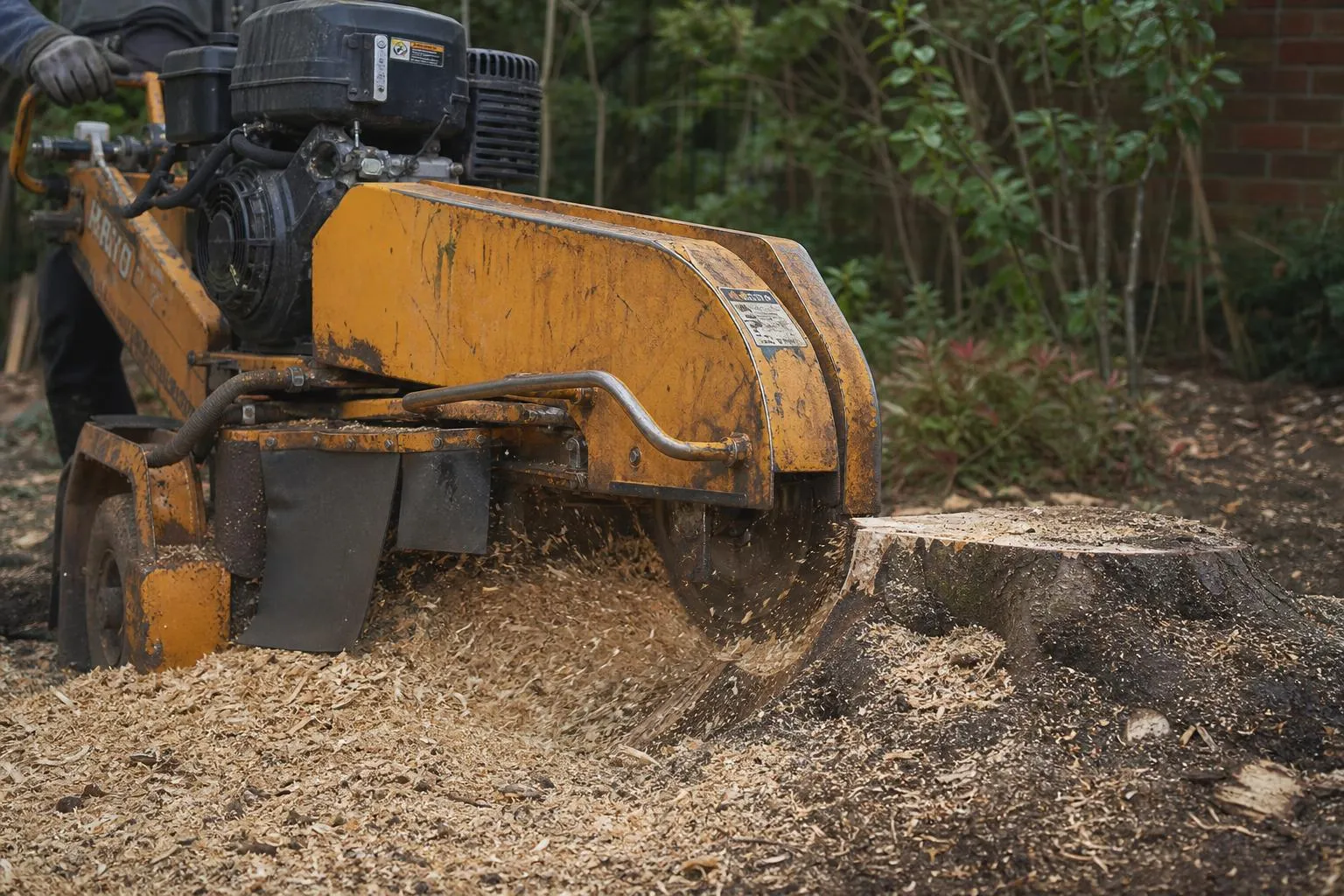
Stump grinding is the fastest, most practical way to deal with a tree stump left after felling or storm damage. We bring a mechanical stump grinder to your property, position the cutting wheel over the stump, and work through a series of grinding passes until the stump sits 150–300 mm below ground level, enough depth for turfing, shrub planting, or laying paving over the top.

The process leaves a shallow void filled with the stump grinding arisings, a mixture of wood chip and soil created by the grinding wheel. We can leave this material as garden mulch, mix it back into the void with topsoil, or remove it from site entirely, depending on your preference. Either way, you'll have a usable piece of ground where the stump used to be.

We cover Caterham, Warlingham, Whyteleafe, Kenley, Woldingham, Old Coulsdon, and the wider Tandridge and Reigate & Banstead areas. Call [PHONE] or use the quote form to get a price specific to your stump.
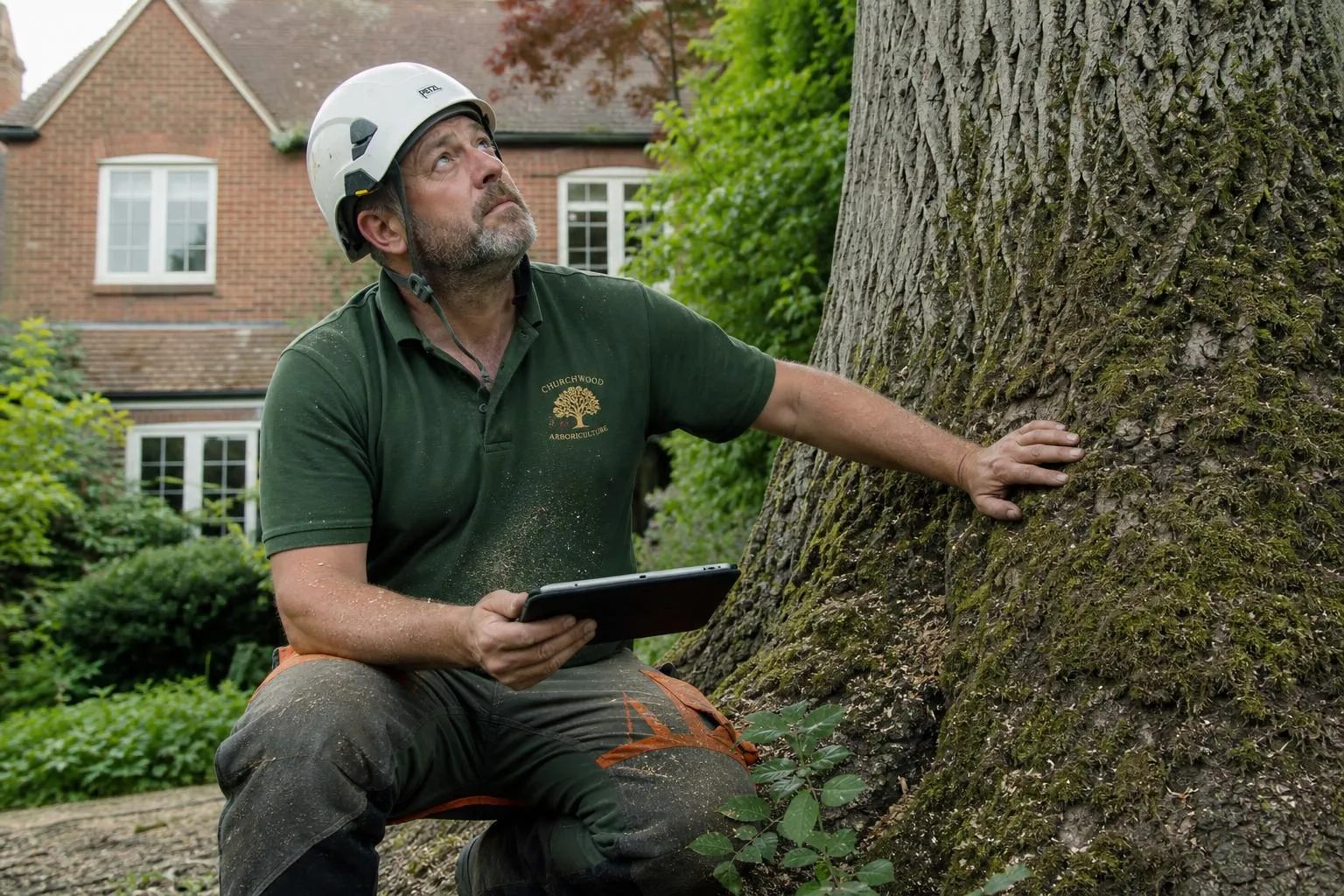
A Caterham tree surgeon assessing a mature oak at the base of the trunk for a quote
NPTC · Fully Insured · BS3998

NPTC Certified Tree Stump Grinding You Can Rely On

Every job we carry out is covered by full public liability insurance and completed by NPTC-certified operatives. That matters when a grinding wheel is working near your fencing, footings, or underground utilities, you want a crew that knows how to carry out a proper access assessment before the machine moves an inch.

A few things that set us apart from a general garden contractor with a hired machine:

  • Right machine for the job. We use compact, tracked machines that fit through a standard garden gate (typically 760 mm), critical for rear garden access in Caterham's terraced and semi-detached housing stock. For larger stumps on open sites, we bring a full-size tracked stump grinder with a wider swing arc and deeper grinding capability.
  • Root flare assessment. We start at the root flare and work inward, accounting for any buttress roots that extend outward from the base. These often need separate passes and are easy to miss on a quick price-match quote.
  • Proximity checks as standard. Before the cutting wheel starts, we confirm the stump's proximity to utilities, drainage runs, and any structures. No surprises mid-job.
  • Depth you can specify. Standard residential grinding goes to 150–300 mm below surface. If you're planning to lay block paving or a hard surface over the area, tell us and we'll grind deeper to give the groundworks the clearance they need.

When Do You Need Stump Grinding?

The most common reason homeowners in Caterham and Surrey call us is a stump left after a tree was felled; whether the felling was planned, storm-related, or following council approval for a TPO tree. But there are a few other situations where stump grinding is the right answer:

  • Epicormic regrowth and suckering. Sycamore, ash, and cherry stumps are particularly persistent. Left untreated, the root system will keep sending up new shoots, sometimes dozens a season. Grinding below the root flare stops this by destroying the wood that fuels regrowth. Chemical treatment with potassium nitrate or SBK Brushwood Killer is an alternative, but takes weeks to months and requires follow-up applications.
  • Honey fungus risk. A decaying stump can become a host for Armillaria (honey fungus), one of the most destructive garden pathogens in the UK. It spreads through the soil on black rhizomorphs and can attack nearby ornamental trees, shrubs, and hedges. Removing the food source by grinding is the most effective preventive measure.
  • Stump decay taking too long. Left alone, a stump can take 10–20 years to fully rot down. In the meantime it's a tripping hazard, a lawn-mower obstacle, and, in some tree species, an ongoing source of regrowth. Stump grinding solves all three issues in a morning.
  • Landscaping or development plans. If you're returfing, replanting a border, or extending paving, the stump needs to go first. We can combine stump grinding with the tree removal job or attend a separate visit, whichever is more practical.

How the Stump Grinding Process Works

Here's what to expect on the day:

  1. Access route check. We confirm the machine can reach the stump, checking gate width, ground conditions, slope, and any overhead obstructions. For tight rear gardens, our compact machine (narrow enough for a 760 mm gate) handles the job without excavating a path.
  2. Stump measurement and site prep. We measure stump diameter at ground level (the primary pricing variable) and clear the immediate area of stones, fencing panels, or debris that could contact the cutting wheel.
  3. Grinding passes. The cutting wheel works across the stump in a series of swing arc passes, chewing progressively deeper. We grind to your specified depth, typically 150–200 mm for turfing, 200–300 mm for planting, deeper on request for paving substrates.
  4. Surface root treatment. Any accessible surface roots running from the stump are ground back. Deep tap roots and lateral roots at distance are left to decay naturally underground, this is normal practice and causes no structural issues for most garden uses.
  5. Arisings management. We rake out the wood chip mulch from the void. You choose: leave it as mulch around borders, mix it with topsoil to backfill the void, or we take it away. If replanting in the same spot is planned, we recommend full removal and quality backfill material, fresh arisings are nitrogen-hungry as they break down and can inhibit planting establishment.
  6. Site clearance. We leave the area clear and tidy. The void will settle slightly over the following weeks as the remaining root mass decays, top up with a little extra topsoil if needed.

Most residential stumps take between 30 minutes and 2 hours depending on diameter and root spread. Multiple stumps in one visit are priced more economically per stump than single visits. Call [PHONE] to discuss your project.

Stump Grinding and Replanting: What You Need to Know

One question we get regularly is whether you can replant in the same spot after stump grinding. The short answer is yes, but there are a few things to bear in mind.

Grinding destroys the stump and disrupts the immediate root zone, but it also breaks up the mycorrhizal network, the fungal associations that support tree root uptake. For a new tree planted in the same spot, this means starting from scratch on those soil relationships. For shrubs and lawn grass, it's less of a concern.

More practically: the arisings left in the void are high-carbon material that absorbs soil nitrogen as it decomposes. If you're replanting soon, remove the arisings entirely and refill the void with quality topsoil and compost. Wait at least four to six weeks before planting if the grinding was done on a fresh, recently-felled stump, the biological activity is at its highest during this period.

For turfing over a ground stump, the same principle applies: remove the arisings, backfill with topsoil, firm it down, and allow the surface to settle before laying turf. A slight hollow may appear after a few weeks; this is the void compacting as the deeper root material decays and is easily topped up.

If you're unsure what end use is right for your project, tell us when you call and we'll factor the appropriate grinding depth and arisings management into the quote. We cover everything from simple single stumps in Caterham gardens to multi-stump clearances on larger Surrey properties.

Credentials

Qualified, Insured and Accountable

When you let someone work at height with a chainsaw over your home, credentials matter.

NPTC Qualified

CS30, CS31 and CS38 certificates across chainsaw use, felling, and aerial rope-and-harness work — the exact tickets to check for.

Fully Insured

Comprehensive public liability cover, up to £5 million, on every job. Ask to see our certificate; we are happy to show it.

BS3998 Compliant

All pruning and felling follows the British Standard for tree work, on every single job.

Locally Based

Working in Caterham and the wider Tandridge district week in, week out.

We are always happy to show our certificates and talk you through exactly how we will approach your job before you commit to anything.

Storm damage or a fallen tree?

Our 24/7 emergency tree removal team responds fast to make the site safe, day or night, across Caterham and Surrey.

Call [PHONE] Now
Good to Know

Frequently Asked Questions

Straight answers on cost, permissions and safety. If something about your tree worries you, book a free assessment.

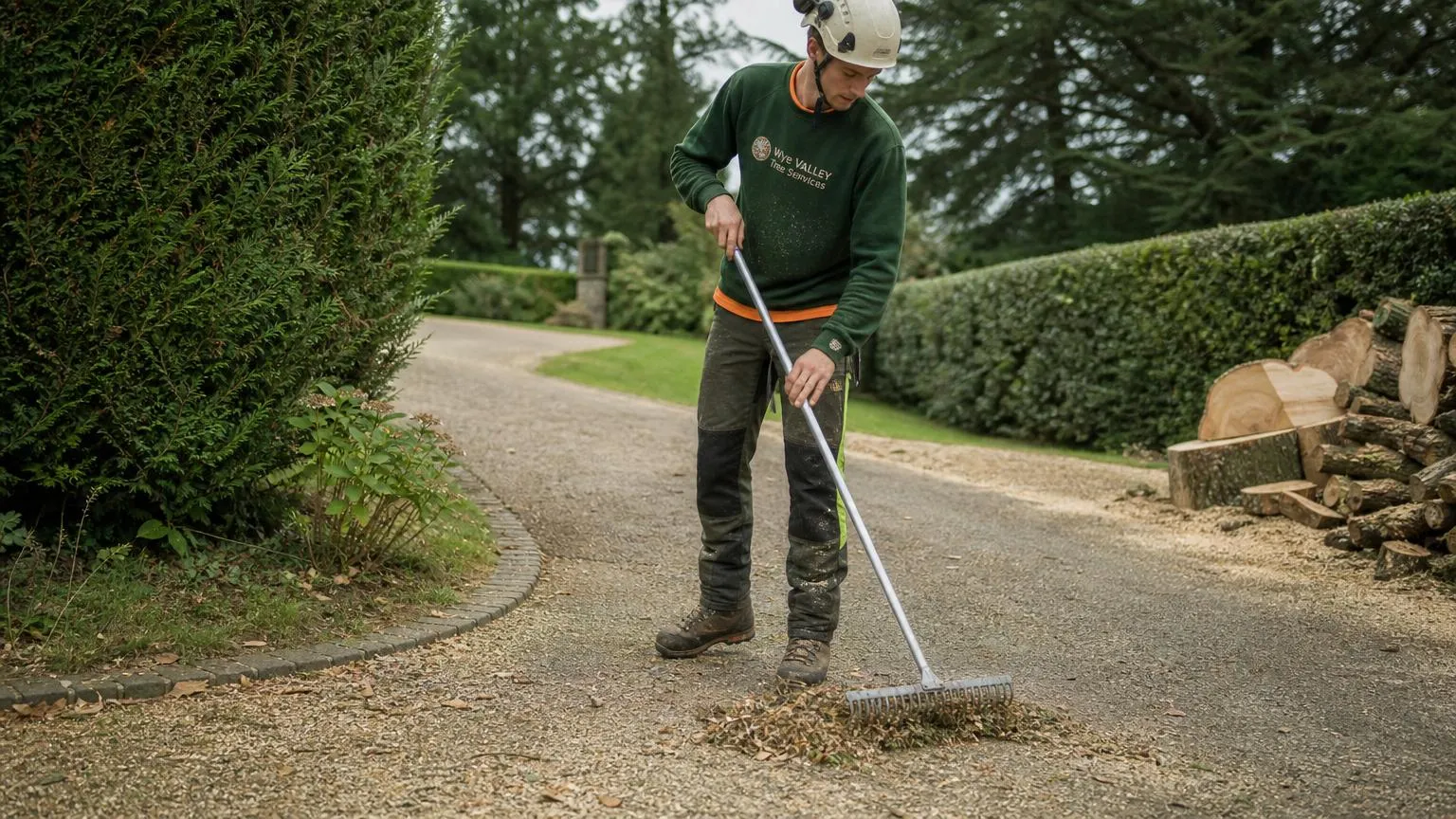
A tree surgeon raking and clearing a driveway at the end of a job in Caterham
How much does it cost to grind a tree stump in the UK?

In Caterham, Checkatrade data puts the average stump grinding cost at £240, with a typical range of £170–£330 for a standard residential stump. Nationally, the cost scales with stump diameter: small stumps (up to about 200 mm across) typically run £95–£145; medium stumps (200–400 mm) £135–£250; large stumps (400 mm+) £280–£450 or more. The three main pricing variables are stump diameter, access difficulty, and whether disposal of the grinding mulch is included. Multiple stumps in one visit cost less per stump than separate call-outs. Call [PHONE] for an accurate quote, we'll ask about the stump's size, location, and access route before giving a figure.

How deep should a tree stump be ground down?

Standard arboricultural practice is 150–300 mm below ground level. For most residential uses, 150–200 mm is sufficient to turf over the area or plant shrubs, the remaining root mass decays in the soil over time without causing issues. If you plan to lay block paving, concrete, or any hard surface over the area, specify this when you call: we'll grind to 250–300 mm or deeper to give the sub-base the clearance it needs. Depth is set at the root flare and measured from the surrounding soil level, not from the top of the stump. If you're unsure what depth your project requires, we'll advise at the time of quoting.

Is it better to grind stumps or have them removed?

Stump grinding and stump removal are related but different services. Grinding mechanically reduces the stump to below ground level using a cutting wheel, it's fast (30 minutes to 2 hours for most domestic stumps), low-disruption, and cost-effective. The remaining root system is left to decay naturally in the ground. Full stump removal involves excavating the stump and extracting the root ball from the soil, it's more disruptive, creates a larger void, and costs more. Grinding is the right choice for the vast majority of residential situations: turfing, border replanting, and paving projects all work well over a properly ground stump. Excavation is generally only required where the root system must be physically cleared, for example, beneath building foundations or where a large root ball sits in the path of drainage works.

What is the cheapest way to get rid of a tree stump?

Chemical treatment using potassium nitrate crystals (or SBK Brushwood Killer for regrowth prevention) is the lowest upfront cost, typically £10–£30 for materials. The drawback is time: the chemicals work by accelerating decay, which still takes months, and the stump remains a physical obstacle and potential honey fungus risk throughout. DIY hire of a small stump grinder runs £120–£200 per day from most tool-hire depots, but factor in machine transport, fuel, safety PPE, and the skill needed to operate a machine with a high-speed cutting wheel safely. For most single domestic stumps, professional stump grinding comes in at a comparable all-in cost to a full day's DIY hire, and the job is done correctly in a fraction of the time. Call [PHONE] and we'll give you a straight price.

Can stump grinding be done near fences, walls, or drains?

Yes, with care. Stump grinding near structures is routine for us: we carry out a proximity check before starting every job, confirming the stump's distance from fencing, boundary walls, drainage inspection covers, and any utilities we're aware of. Our compact machines are well-suited to tight residential gardens where a standard-size grinder wouldn't manoeuvre safely. Where a stump sits very close to a structure (within 150–200 mm), we may grind to a reduced depth on the adjacent side to protect the footings or fence post. We'll explain any limitations honestly at the quoting stage, we won't start a job we're not confident we can complete cleanly. If you know there's gas, water, or electricity running near the stump, tell us in advance so we can plan the approach accordingly.

How long before I can replant after stump grinding?

For shrubs and perennials, four to six weeks is a reasonable minimum, long enough for the initial high-nitrogen decomposition phase to settle. For a new tree in the same spot, wait longer (three to six months if possible) and replace the arisings entirely with fresh topsoil and compost. The stump grinding mulch left in the void is nutrient-poor for young plants as it breaks down. For lawn turfing, remove the arisings, backfill with topsoil, and allow the surface to firm up before laying, usually two to four weeks. We'll advise on the appropriate approach for your specific replanting plans when we quote, and we can arrange topsoil delivery and backfill as part of the job if needed.

Free Quote

Book Your Free Site Visit

NPTC-certified, fully insured, BS3998 on every job. Tell us about your tree and we’ll come back with a clear, written price.

  • Free written quote before any work starts
  • TPO & conservation-area checks handled for you
  • Tidy finish — all arisings chipped, logged or removed

Get a Free Quote

Tell us about the job — free, no-obligation quote.

No spam. No obligation.

Ready to Clear That Stump? Call Us Today

Whether it's a single stump in a rear Caterham garden or a multi-stump clearance across a larger Surrey property, we'll give you a straight price and get it done properly. NPTC certified, fully insured, compact-access machines for tight rear gardens. Average stump grinding cost in Caterham: £240, call us and we'll confirm your price before we travel.

Tap to Call: [PHONE]