Crown Thinning in Caterham and Across Surrey
NPTC Qualified · Fully Insured

Crown Thinning in Caterham and Across Surrey

More light into your garden, less wind resistance in the canopy, without changing the shape or size of your tree. NPTC certified and fully insured.

Overview

What Is Crown Thinning?

Crown thinning is the selective removal of branches from within the canopy to reduce density and improve light transmission, without reducing the overall size or shape of the tree. If your oak, beech, or sycamore is throwing too much shade over the garden, or you're concerned about wind loading on a large specimen, crown thinning is almost always the right answer.

It works by removing crossing branches, internal deadwood, and weak secondary growth throughout the crown. The result is a lighter, more open canopy that lets more light and air through while keeping the tree's natural outline intact. Done properly to BS3998:2010, the British Standard for tree work, crown thinning has no negative effect on tree health. In fact, removing competing internal branches and deadwood typically improves it.

We carry out crown thinning across Caterham, Warlingham, Whyteleafe, Kenley, Woldingham, and Old Coulsdon for homeowners, landlords, and businesses. Every job is assessed on-site before we quote, and we handle all the work from initial inspection through to chipping or removing the arisings.

Call [PHONE] to arrange a free site visit.
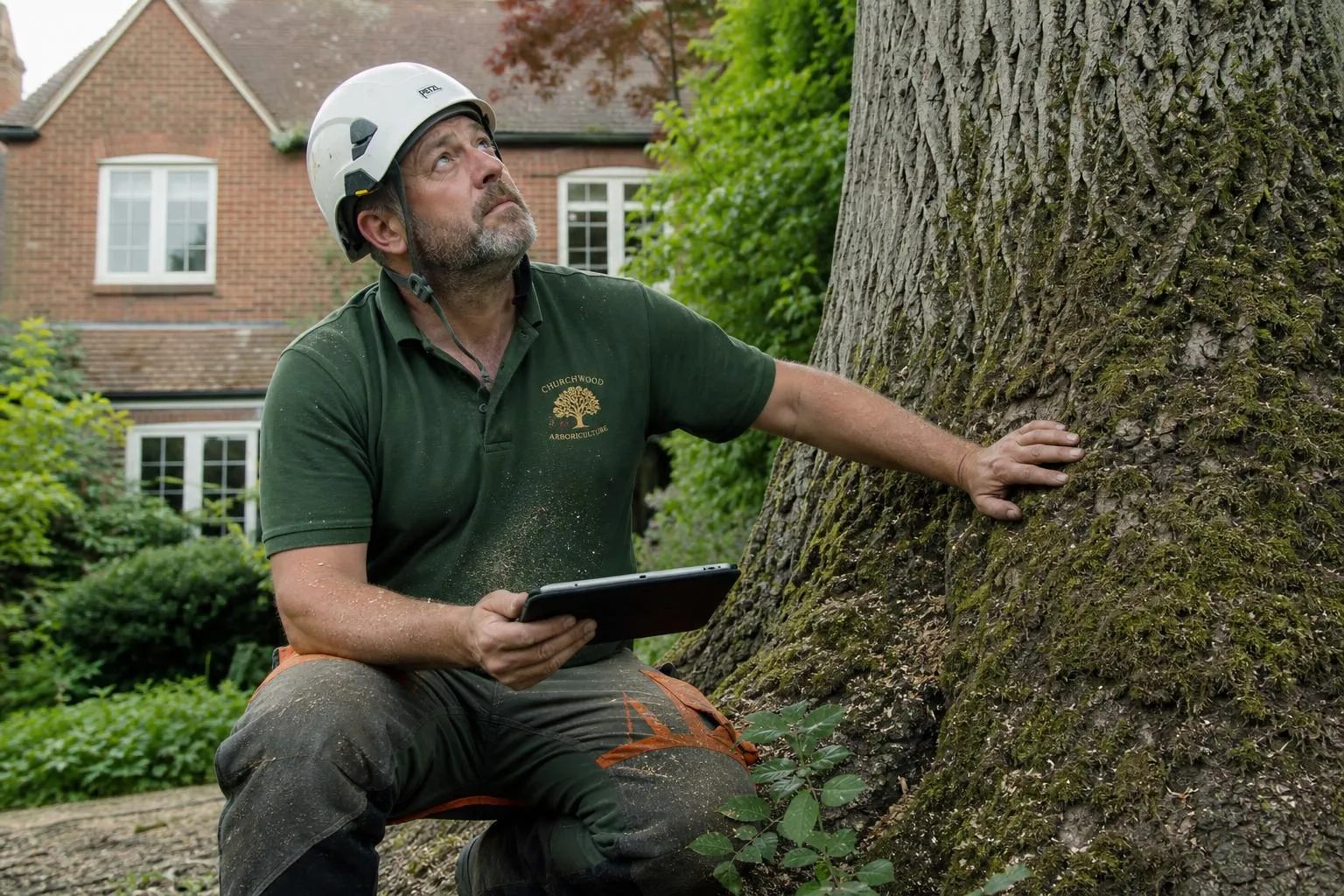
A Caterham tree surgeon assessing a mature oak at the base of the trunk for a quote
NPTC · Fully Insured · BS3998

When Does a Tree Need Crown Thinning?

Most trees in residential gardens benefit from periodic thinning, but there are specific signs that tell you the time has come. If you recognise any of the following, it's worth getting a professional opinion:

  • Dense shade on the lawn or garden beds. When a mature tree blocks so much light that grass and plants struggle to grow beneath it, canopy thinning restores usable growing space without the need to fell the tree.
  • Visible wind rock during storms. A very dense crown acts like a sail, the wind resistance it creates puts stress on the root plate and trunk. Reducing crown density reduces that sail effect, lowering the risk of uprooting in high winds.
  • Excessive leaf drop blocking gutters. A denser canopy produces more leaf debris. Thinning reduces total leaf volume and improves the tree's airflow, which also reduces fungal problems caused by stagnant, humid conditions inside the canopy.
  • Visual imbalance or a noticeably heavy side. A lopsided crown puts asymmetric loading on the trunk and root system. Thinning to rebalance crown weight is often part of a wider remedial pruning programme.
  • Preparation before a storm season. Surrey's autumn and winter storms regularly bring down large branches from heavy-crowned trees. A pre-season thinning assessment is practical insurance.

Not sure whether your tree needs thinning, crown reduction, or something else entirely? Call us on [PHONE] and we'll come out and give you an honest assessment, free of charge.

Why Choose Caterham Tree Surgeons for Crown Thinning?

Crown thinning is a precision job. Remove too little and you haven't solved the problem. Remove too much and you stress the tree, trigger heavy epicormic regrowth from the trunk and main branches, and end up with a worse situation within two or three seasons. BS3998:2010 recommends removing no more than 30% of the live crown in a single operation, and that upper limit exists for good reason. Our team works within that specification on every job.

Here's what you get when you work with us:

  • NPTC certified operatives, every climber holds the relevant National Proficiency Tests Council certificates (CS30, CS31, CS38 for aerial chainsaw work). These are the qualifications Checkatrade, the Arboricultural Association, and informed buyers tell you to look for.
  • Fully insured, comprehensive public liability cover on every job, protecting your property and your neighbours'.
  • BS3998:2010 compliance, we specify the percentage removal before we start and work to that target. No guesswork, no over-thinning.
  • Natural target pruning cuts, every cut is made just outside the branch collar, promoting correct callus formation and maintaining the tree's natural disease defences. This matters for the long-term health of the tree.
  • Deadwood included as standard, internal deadwood removal is part of every crown thinning operation. Dead branches are a safety hazard and an entry point for decay; we remove them as a matter of course.
  • Local knowledge, we work across Tandridge District and know the common species here: oak, beech, sycamore, ash. We know how they respond to pruning and how to get the specification right first time.

How Our Crown Thinning Service Works

We keep the process straightforward. Here's what to expect from first call to cleared site:

  1. Free site visit and assessment. We come out, look at the tree, and discuss what you want to achieve. We assess crown density, branch architecture, any internal deadwood or crossing branches, and access. We'll also check whether the tree has a Tree Preservation Order (TPO) or sits in a conservation area, if it does, we handle the notification process for you.
  2. Written quote with specification. You receive a written quote that specifies the percentage of live crown to be removed (typically 10–25% for a standard residential thinning) and what deadwood and crossing branch removal is included. No surprises on the day.
  3. Crown assessment and selective branch identification. Before climbing, we walk the canopy visually from ground level, identifying the branches to remove: internal deadwood, rubbing or crossing branches, and any weak secondary growth that reduces light without contributing to the crown's structure.
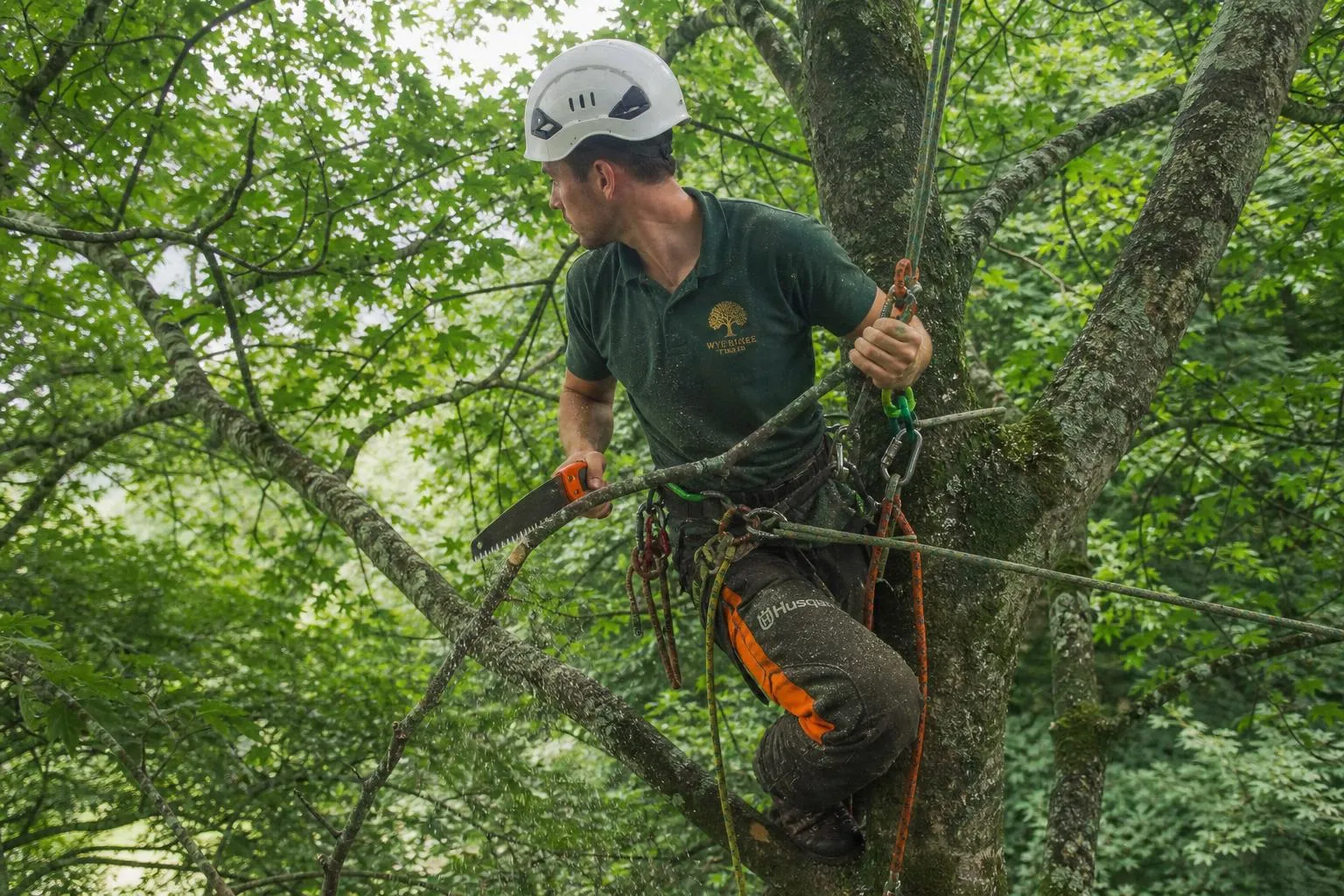
  4. Aerial work and balanced thinning. Our climbers work from the top down, removing the identified branches and continually checking crown balance as they go. We take care not to create large wounds or remove branches that contribute to the tree's structural integrity.
  5. Site clearance. All arisings, the cut branches and foliage, are chipped on-site or removed. You choose at the quote stage. We leave the garden clean.

Most residential crown thinning jobs are completed in half a day. For large or complex trees in restricted access gardens, allow a full day. We'll give you a realistic time estimate when we quote.

Crown Thinning, Crown Lifting, and Crown Reduction: What's the Difference?

These three operations are frequently confused, and the distinction matters, they solve different problems and have different effects on the tree.

Crown Thinning

What it does: Reduces the density of the canopy by selectively removing internal branches, deadwood, and crossing growth. The tree stays the same size. Its outline does not change. The canopy just becomes lighter, more open, and better ventilated. This is the right operation when you want more light in the garden, less wind resistance, or improved canopy health, without altering the tree's form.

Crown Lifting

What it does: Removes the lower branches to increase ground clearance beneath the canopy. Crown lifting is useful when lower branches are overhanging a path, road, or building, or when you want more light at ground level rather than through the canopy. We specify crown lifts to a minimum clearance height, for example, 2.5 m over a garden path or 5 m over a public road. Crown lifting is often combined with crown thinning on the same visit.

Crown Reduction

What it does: Reduces the overall size of the tree by shortening the outer branches back to suitable growth points, per BS3998. Unlike crown thinning, crown reduction does change the outline of the tree, it makes it smaller. This is the operation you need when the tree has genuinely outgrown its position, is too close to a building, or is causing structural concerns that thinning alone won't address. See our dedicated crown reduction page for full detail. Crown reduction is a more significant intervention than thinning, it carries higher risk of stimulating epicormic growth and requires more careful specification.

Not sure which is right for your tree? Call [PHONE], we'll tell you honestly which operation will solve your problem, and whether a combination approach makes sense.

Crown Thinning on TPO Trees and in Conservation Areas

Caterham and the surrounding Tandridge District has a significant number of protected trees, both individually under Tree Preservation Orders (TPOs) and as part of conservation areas covering parts of Caterham Hill and the surrounding chalk downland villages.

If your tree has a TPO, you need to apply to Tandridge District Council for consent before carrying out any crown thinning or pruning work. Applications go through the Planning Portal tree works form. Tandridge offer a pre-application tree protection advice service for £75 (including VAT), which can be worthwhile for significant trees before committing to formal application.

For trees in a conservation area, you must give six weeks' written notice (Section 211 notice) to Tandridge District Council before work begins, provided the tree's trunk is over 75 mm in diameter at 1.5 m above ground. For thinning work specifically intended to benefit the growth of other trees, that threshold rises to 100 mm diameter. If the council does not issue a TPO within that six-week period, you can proceed, and the consent remains valid for two years.

We manage the notification process for our clients wherever required. If you're unsure whether your tree is protected, Tandridge's online TPO register at tdcmaps.tandridge.gov.uk shows protected trees across the district. We can check this for you at the site visit stage.

One further check that applies to crown work in particular: bats. All UK bat species and their roosts are legally protected, and mature trees with cavities, woodpecker holes, loose bark, or dense ivy are exactly where roosts turn up. Disturbing or destroying a roost is a criminal offence, even if nobody knew it was there. That's why we look for potential roost features as part of every site assessment before crown work is specified. If we spot signs of bats, work on that part of the tree pauses and a bat roost survey by a licensed ecologist may be needed before we can proceed, with Natural England consent where a roost is confirmed. It rarely affects a routine residential thinning, but it's a check no responsible tree surgeon skips.

Credentials

Qualified, Insured and Accountable

When you let someone work at height with a chainsaw over your home, credentials matter.

NPTC Qualified

CS30, CS31 and CS38 certificates across chainsaw use, felling, and aerial rope-and-harness work — the exact tickets to check for.

Fully Insured

Comprehensive public liability cover, up to £5 million, on every job. Ask to see our certificate; we are happy to show it.

BS3998 Compliant

All pruning and felling follows the British Standard for tree work, on every single job.

Locally Based

Working in Caterham and the wider Tandridge district week in, week out.

We are always happy to show our certificates and talk you through exactly how we will approach your job before you commit to anything.

Storm damage or a fallen tree?

Our 24/7 emergency tree removal team responds fast to make the site safe, day or night, across Caterham and Surrey.

Call [PHONE] Now
Good to Know

Frequently Asked Questions

Straight answers on cost, permissions and safety. If something about your tree worries you, book a free assessment.

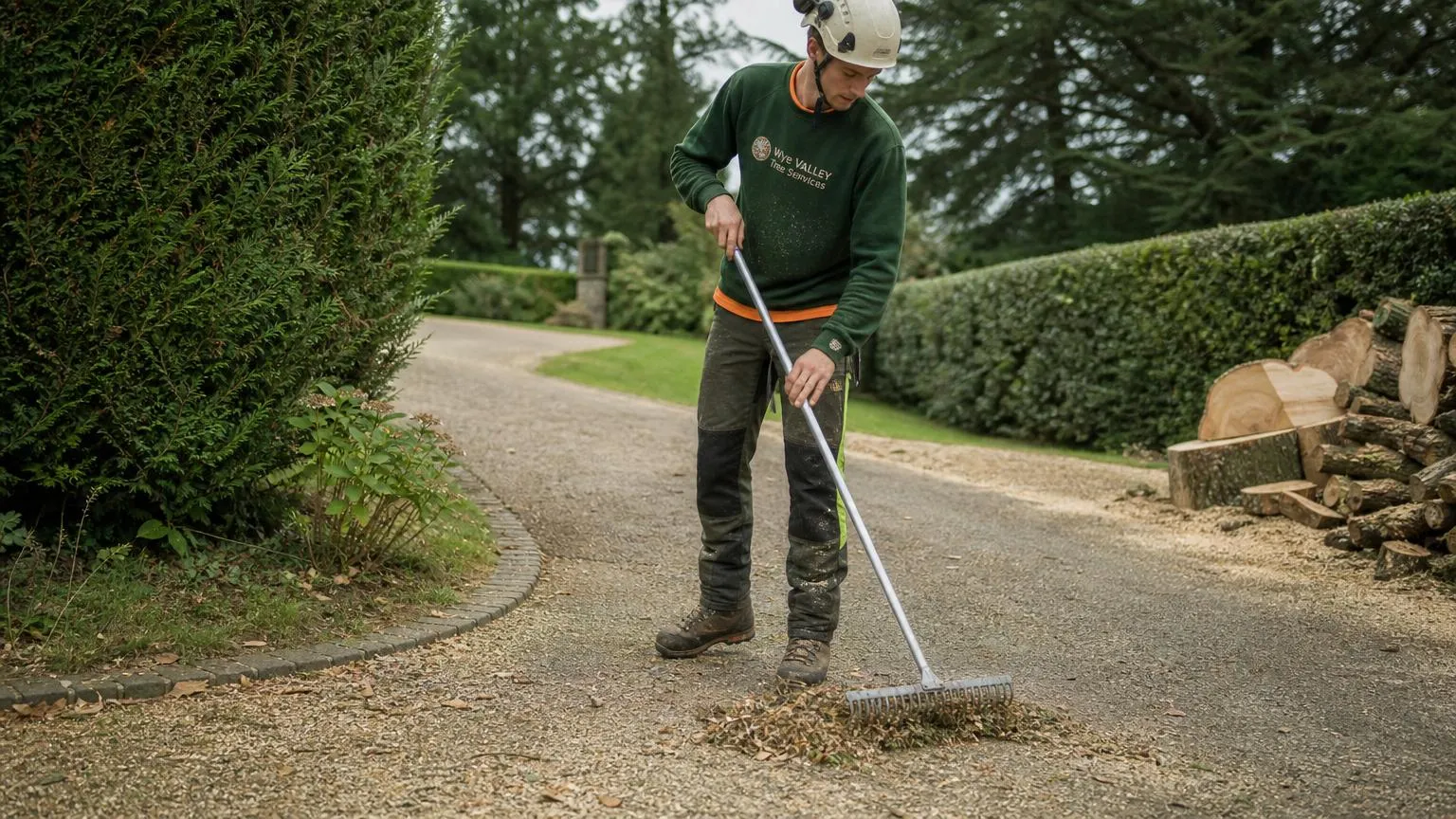
A tree surgeon raking and clearing a driveway at the end of a job in Caterham
What are the benefits of crown thinning?

Crown thinning delivers four main benefits. First, more light into the garden, a thinned canopy transmits significantly more sunlight, improving growing conditions for lawn and garden beds beneath the tree without reducing the tree's size. Second, reduced wind loading, a dense crown acts like a sail; thinning reduces the sail effect so the tree is less vulnerable to uprooting or branch failure in high winds, a real concern in Surrey's autumn storms. Third, improved airflow through the canopy, better air circulation reduces the humid, stagnant conditions that encourage fungal disease. Fourth, removal of deadwood, internal dead and dying branches are removed as part of the process, eliminating a safety hazard and preventing decay from spreading into live wood. All of this is achieved without changing the tree's shape or outline.

What is the difference between crown thinning and crown reduction?

Crown thinning removes branches from within the canopy, reducing density but not size. The tree's outline stays the same. Crown reduction shortens the outer branches back to suitable growth points, making the tree physically smaller. Thinning is the right operation when your tree is the right size but too dense, causing shade, wind issues, or canopy health problems. Crown reduction is the right operation when the tree has genuinely outgrown its position and needs to be made smaller. These are different operations with different specifications and different effects on how the tree responds. Over-specifying crown reduction when thinning would suffice is one of the most common mistakes we see, it's a more significant intervention and carries a higher risk of stimulating heavy regrowth. See our crown reduction page for more detail.

What does crown lifting mean?

Crown lifting removes the lower branches of the tree to increase the clearance height beneath the canopy. If branches are overhanging a path, driveway, or neighbour's fence at low level, or if you want more light at ground level rather than through the canopy, crown lifting addresses this directly. We specify crown lifts to a minimum clearance height, typically 2.5 m over a garden or walkway, up to 5.2 m over a public highway. Crown lifting can be done as a standalone operation or combined with crown thinning on the same visit. Like all pruning work, it is carried out to BS3998:2010 to protect the tree's long-term structure.

Does crown thinning harm the tree?

No, provided it is done correctly and to the right specification. BS3998:2010 recommends removing no more than 30% of the live crown in a single operation. Within that limit, crown thinning has no negative effect on tree health and typically improves it by removing competing, dead, or weakly attached branches. The key is the pruning cuts themselves: every cut must be made just outside the branch collar using the natural target pruning method, which promotes correct callus formation and maintains the tree's built-in disease defences. Cuts made flush to the stem or leaving long stubs are a different matter, these damage the callus zone and create entry points for decay fungi. Our NPTC-certified climbers make the right cut, in the right place, every time. One post-thinning response worth knowing: some trees produce epicormic shoots, vigorous upright growth from the trunk or main branches, in the season following pruning. This is more common after heavy crown reduction than after thinning, but it can occur. If it does, a light follow-up prune two or three seasons later usually keeps it in check.

What is the best time of year for crown thinning?

Most deciduous trees can be thinned at any time of year, but late autumn and winter, once the leaves have dropped, is generally the best period. Without the foliage in the way, it's easier to see the branch architecture clearly, identify crossing branches and deadwood, and assess crown balance accurately. This also avoids the nesting bird season (typically February through August), when work on occupied trees should not be carried out. October onwards, once nesting has finished and leaves are falling, is a good time for most Surrey species including oak, beech, and sycamore. One exception: avoid pruning cherry, plum, and other Prunus species in autumn and winter due to silver leaf disease risk, for these, late summer (July to August) is preferred. We'll advise on the best timing for your specific tree at the site visit.

How much does crown thinning cost in Caterham?

Crown thinning costs vary depending on the size of the tree, its species, access to the garden, and how much work is required. As a general guide, tree pruning in Caterham averages around £380 according to Checkatrade data, with a typical range of £270–£530 for residential work. Larger, more complex trees or restricted-access gardens will sit toward the top of that range. We provide a fixed written quote after a free site visit, no hourly rates, no unexpected additions on the day. If your tree is covered by a TPO or sits in a conservation area, any council application costs are separate, though we handle the paperwork. Call [PHONE] to book your free assessment.

What is the one-third rule in tree pruning?

The one-third rule, sometimes called the "one-in-three" rule, is the principle that no more than one-third of a plant's or tree's growth should be removed in any single season. Removing more than this in one operation risks putting the tree under significant stress, triggering excessive regrowth or, in severe cases, causing long-term decline. In arboricultural practice, this aligns closely with the BS3998:2010 guidance that crown thinning should not remove more than 30% of the live crown in a single operation. We work within this limit on every job we specify. If a tree has been severely neglected and needs more substantial work than a single session allows, we'll advise on a phased programme spread over two or three years.

Free Quote

Book Your Free Site Visit

NPTC-certified, fully insured, BS3998 on every job. Tell us about your tree and we’ll come back with a clear, written price.

  • Free written quote before any work starts
  • TPO & conservation-area checks handled for you
  • Tidy finish — all arisings chipped, logged or removed

Get a Free Quote

Tell us about the job — free, no-obligation quote.

No spam. No obligation.

Book Your Crown Thinning Assessment in Caterham

If your tree is causing heavy shade, showing signs of wind stress, or simply looks denser than it should, a crown thinning assessment costs you nothing. We come out, look at the tree with you, and give you an honest view of what it needs, whether that's a straightforward canopy thinning, a combined thinning and crown lifting, or something else entirely. NPTC certified, fully insured, and working to BS3998 on every job across Caterham, Warlingham, Whyteleafe, Woldingham, Kenley, and Old Coulsdon.

Call [PHONE] or email [EMAIL] to arrange your free site visit.

Tap to Call: [PHONE]