Crown Reduction in Caterham
NPTC Qualified · Fully Insured

Crown Reduction in Caterham

Reduce your tree's height and spread safely, without losing its natural shape, NPTC-certified and fully insured throughout.

Overview

What Crown Reduction Actually Does for Your Tree

Crown reduction is the right solution when a tree has grown too large for its surroundings, overhanging the roof, shading the garden heavily, or casting more shade than you'd like, but you want to keep the tree rather than remove it. We reduce the overall height and spread by making carefully placed cuts back to suitable lateral branches, so the canopy shrinks to a manageable size while keeping its natural shape.

This is not the same as lopping or topping. Every cut we make is to a live lateral branch of the right size, what the British Standard BS3998:2010 calls a suitable growth point. That standard exists because a poorly placed cut leaves dead stubs that become entry points for decay, weakening the tree over years. When you book crown reduction with Caterham Tree Surgeons, we follow BS3998 on every cut, on every tree, every time.

We carry out crown reduction work across Caterham, Warlingham, Whyteleafe, Kenley, Woldingham, Old Coulsdon, and Chaldon. Whether the tree is in a domestic back garden or on land with a Tree Preservation Order, we'll assess it and give you a straight answer about what's achievable.
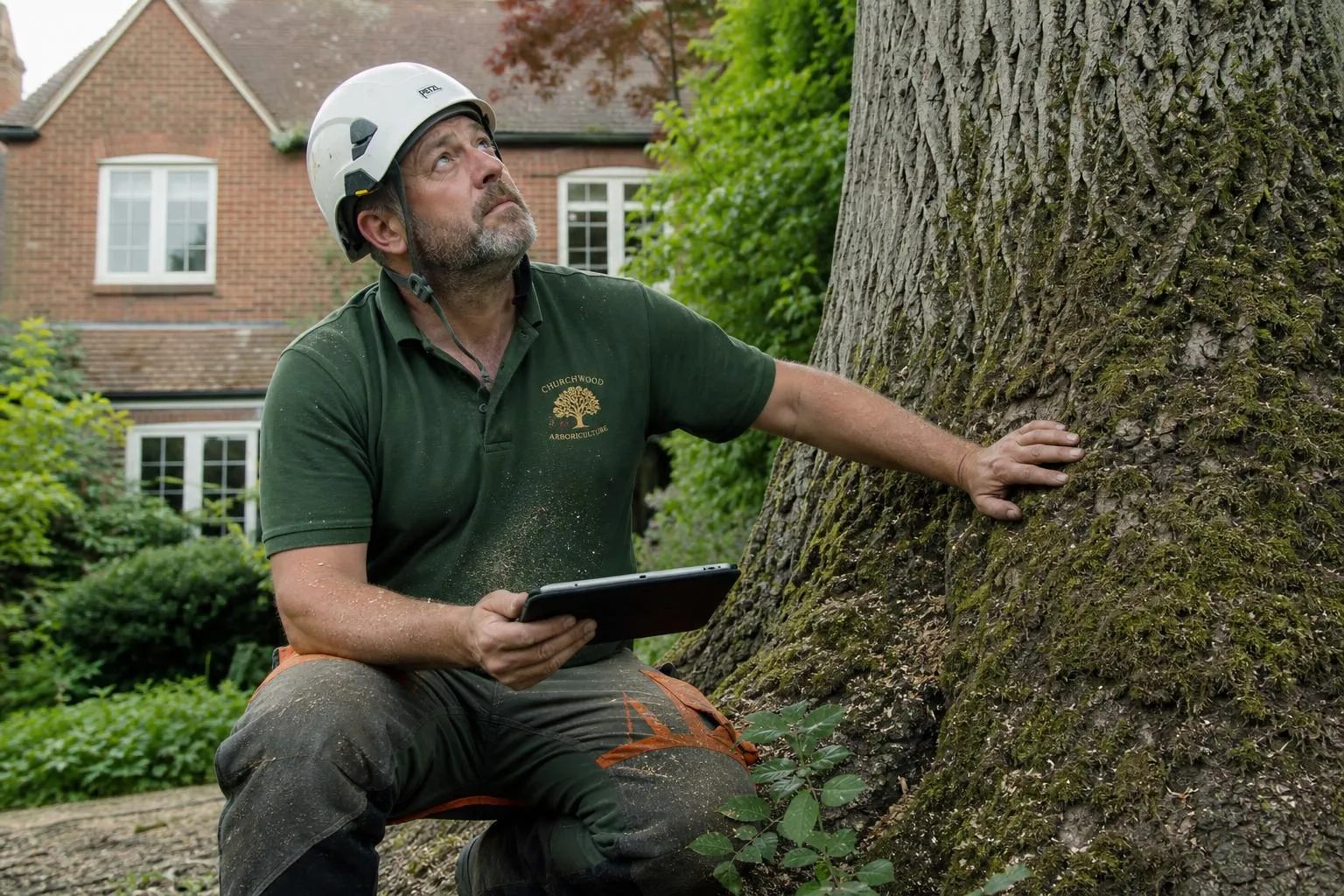
A Caterham tree surgeon assessing a mature oak at the base of the trunk for a quote
NPTC · Fully Insured · BS3998

When Crown Reduction Is the Right Answer

Not every overgrown tree needs to come down, and not every shading problem requires a drastic cut. Crown reduction works best when:

  • The tree is overgrowing your roof or gutters, branches close to a building increase the risk of damage in storms, and in Surrey's clay soil the roots of a large tree can affect drainage and foundations. Reducing the crown lightens the load and the risk.
  • Excessive shading is killing the lawn or garden, a proportionate height and spread reduction lets significantly more light through without removing the tree entirely.
  • The crown is approaching power lines or a neighbour's property, we reduce the spread on the relevant side, or all round, to create the clearance you need.
  • The tree has grown unbalanced, whether from previous work or natural lean, a balanced reduction restores a symmetrical crown outline and improves wind resistance.
  • You have a TPO tree you cannot remove, crown reduction is one of the few interventions available on a protected tree. We can handle the Tandridge District Council application as part of the job.
  • An insurance assessor has flagged the tree, subsidence concerns relating to large trees on Surrey clay are common, and a documented, proportionate reduction with a written specification supports any insurer correspondence.

If you're not certain whether crown reduction, crown thinning, or tree removal is the better route, tell us what the tree is doing that concerns you, we'll advise you honestly on site.

How We Carry Out Crown Reduction

Crown reduction sounds straightforward, make the tree smaller, but the quality of the outcome depends almost entirely on how each cut is made and where. Here is what the job looks like from enquiry to finished tree.

  1. Free site visit and specification. We visit, assess the tree, and agree a target height and spread reduction in metres, for example, reduce height by 2 m and spread by 1.5 m on all sides. We check whether the tree has a TPO or is in a conservation area before you commit to anything.
  2. Planning and permissions (if required). If the tree is TPO'd or in a Caterham conservation area, we submit the application or Section 211 notice to Tandridge District Council on your behalf. Work cannot start until consent is received, typically 8 weeks for a TPO application; 6 weeks' notice for conservation area trees with a trunk over 75 mm diameter measured at 1.5 m.
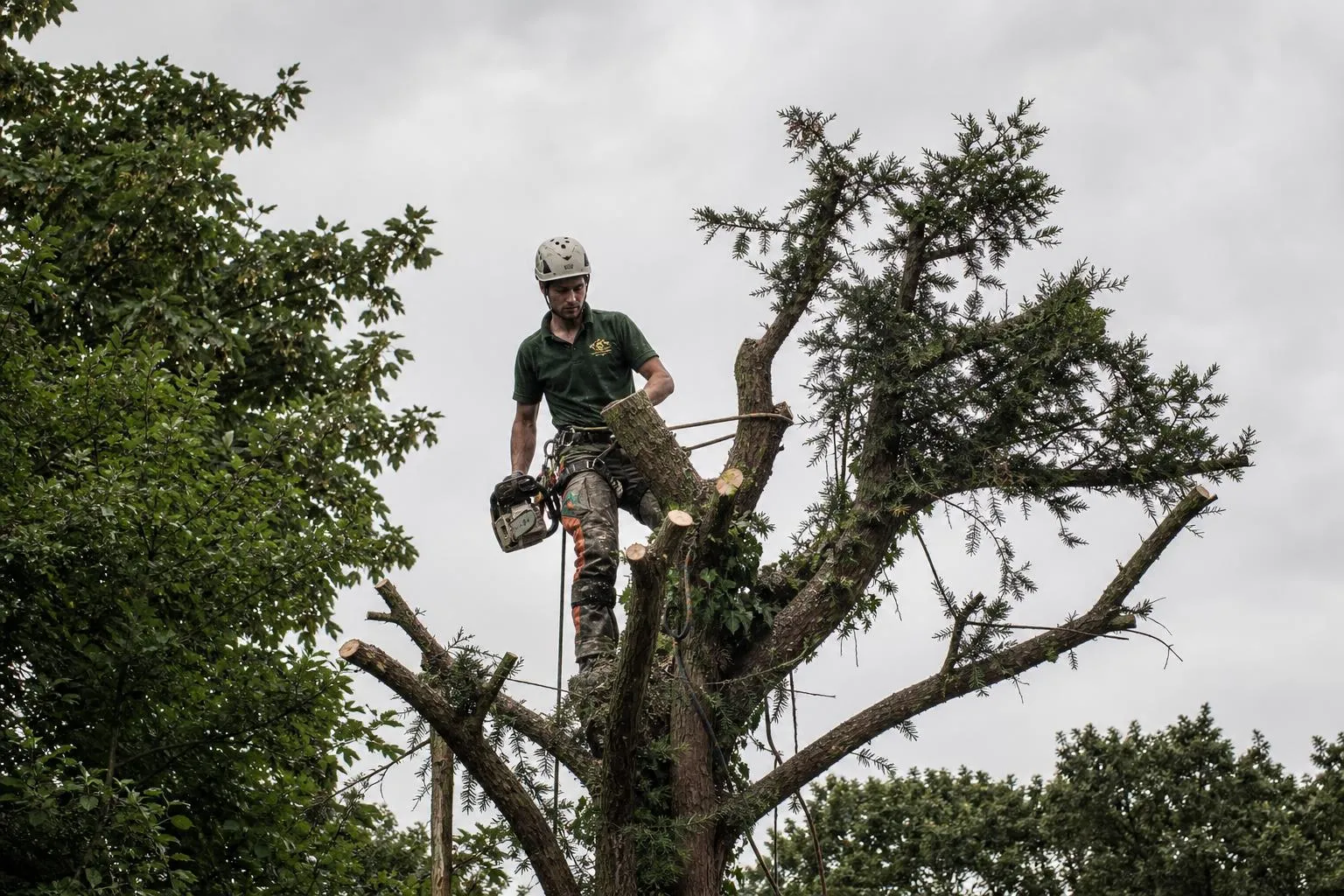
  3. Reduction from the top down. We work through the crown systematically, always top down, cutting each branch back to a suitable lateral of at least one-third the diameter of the removed section. This is the BS3998 requirement that prevents stub cuts and the decay columns they cause. We keep the reduction balanced across the whole crown as we work.
  4. Crown outline check. Once the primary cuts are complete, we step back and check the crown outline, the tree's natural silhouette, to make sure it reads as a well-shaped tree at the new size, not a hat-racked stump.
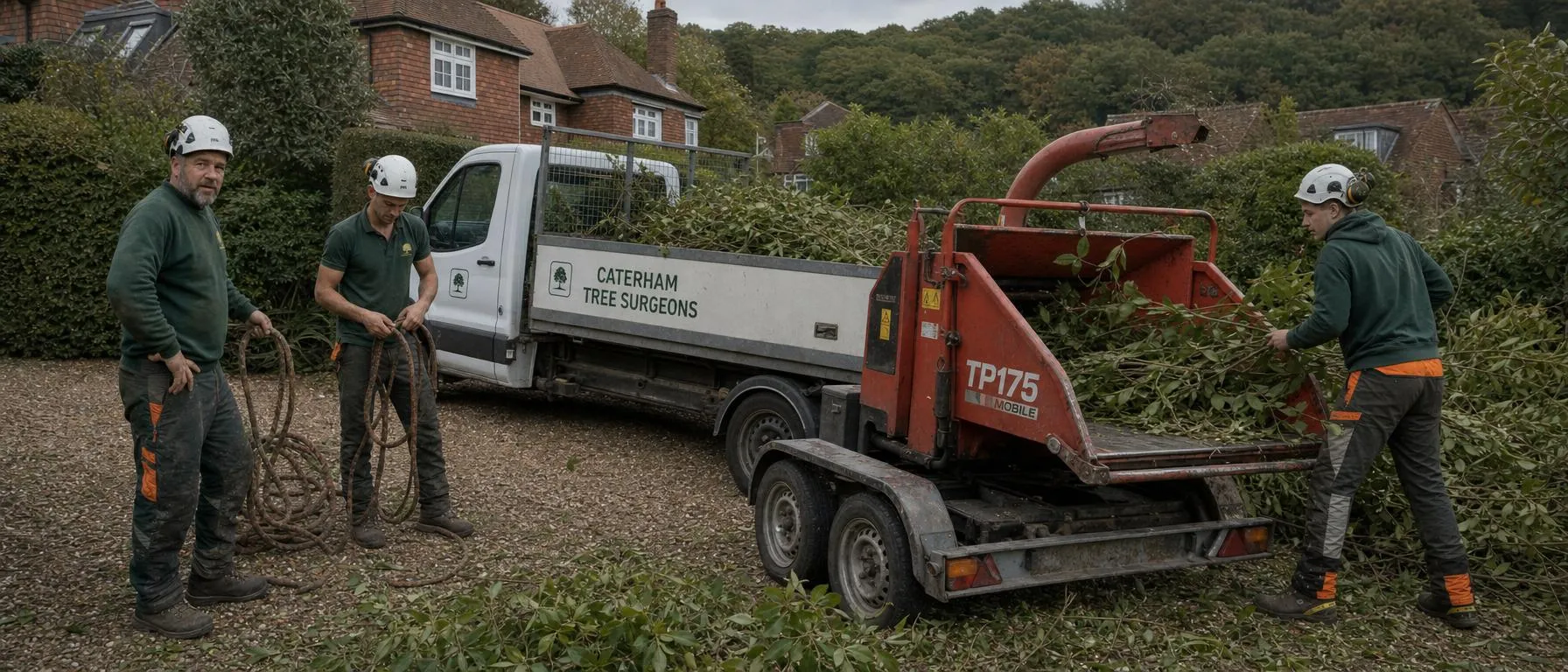
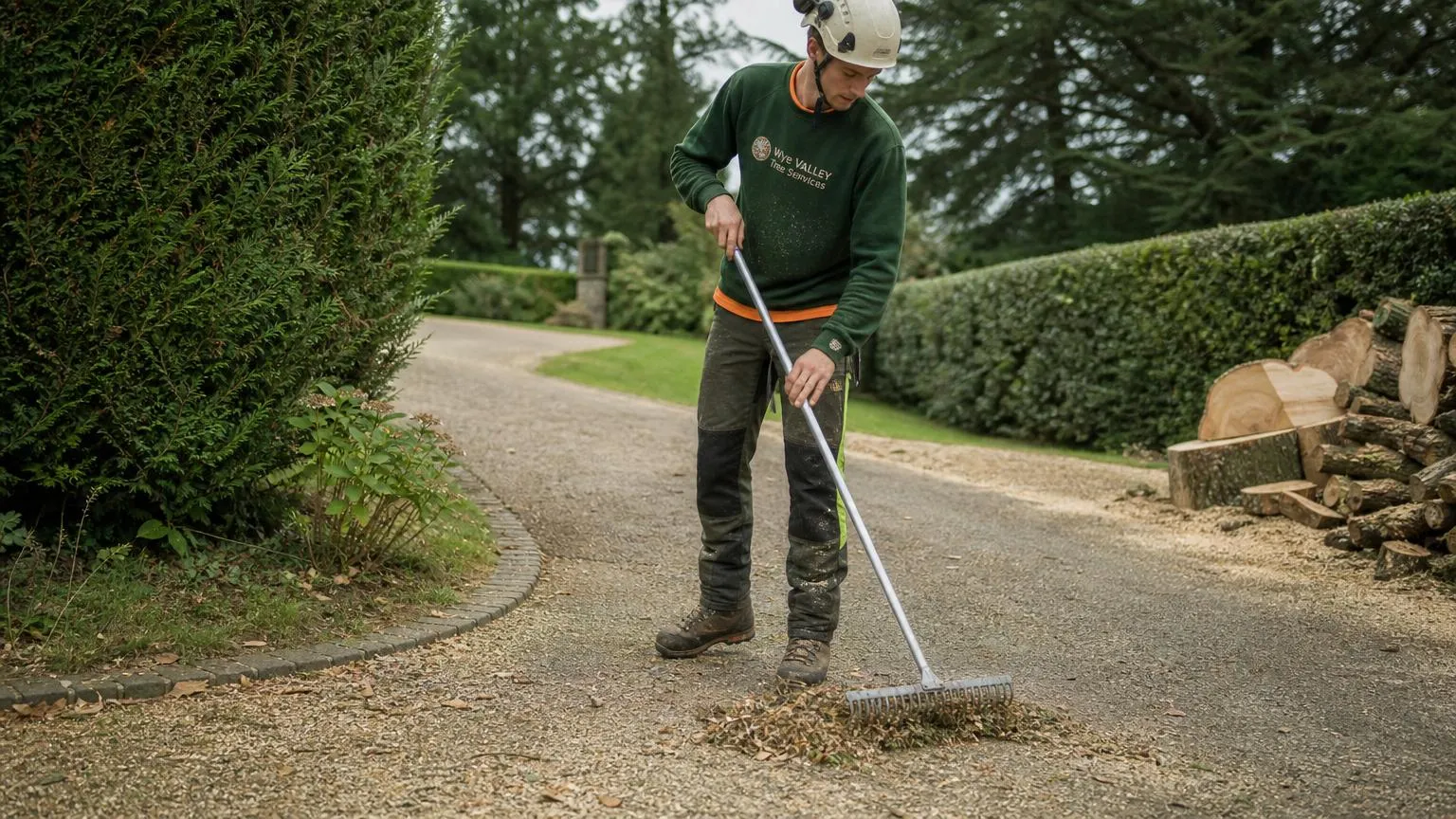
  5. Debris cleared, site left clean. All arisings are chipped or removed. We leave the site as we found it.
  6. Aftercare advice. We'll flag if the tree is likely to produce strong epicormic regrowth, the vigorous shoots that often develop along pruned branches after a reduction. Some tree species do this heavily; we'll tell you whether a follow-up tidy at 1–2 years is worth planning for.

Crown Reduction Done to Standard, Not Just to Size

Crown reduction is one of the most technically demanding tree surgery operations. The wrong cut in the wrong place, a stub left too long, a lateral too small, a reduction too severe, can cause lasting damage to a tree. We take that seriously.

Our tree surgeons hold NPTC chainsaw certificates (CS30, CS31, CS38) and are fully insured for all aerial and ground-based tree work. We specify the job in writing before any work begins, so you know exactly what percentage of crown will be removed and why. BS3998 recommends not exceeding 30% of live crown in a single operation, we work within that limit on every job, and we'll be upfront with you if the tree's condition or size means a phased approach over two seasons is safer.

We work on oak, beech, sycamore, ash, and the full range of garden trees common across the Caterham and Tandridge area, including TPO-protected specimens where a formal application to Tandridge District Council is required. Every job comes with a written record of the specification and the work carried out, which you can use for insurance correspondence if needed.

  • NPTC certified (CS30, CS31, CS38)
  • Fully insured for all tree work
  • BS3998:2010 compliant on every cut
  • TPO and conservation area applications handled
  • Written specification provided before work starts
  • All arisings removed or chipped on site

Ready to book a free site visit? Call us on [PHONE] or send us a message and we'll come and take a look.

Crown Reduction vs Crown Thinning: What Is the Difference?

These two operations sound similar but they do different jobs, and it is worth understanding the difference before booking.

Crown reduction makes the tree physically smaller. The height and spread are reduced by cutting back the outermost branches to suitable lateral growth points. The canopy outline stays similar in shape but the whole tree is contained within a smaller footprint. This is the right operation when the tree has outgrown its space, is close to a building, or is casting more shade than you want.

Crown thinning does not change the size of the tree. Instead, we remove selective branches from inside the canopy, typically 15–20% of the internal structure, to improve airflow and let more light through the crown without altering its overall height or spread. Thinning is the right operation when the tree is the right size but the canopy is too dense, making the garden dark or creating wind resistance that worries you in storms.

Some trees benefit from both at the same time: a modest reduction in overall size combined with internal thinning. We'll tell you which approach, or combination, suits your particular tree on the site visit.

Crown reduction should not be confused with pollarding, which removes all the main branches above a set height. Most trees should not be pollarded unless it was already an established management regime, starting a pollard cycle on a mature tree that was not previously managed that way causes severe stress and is not something we recommend.

Credentials

Qualified, Insured and Accountable

When you let someone work at height with a chainsaw over your home, credentials matter.

NPTC Qualified

CS30, CS31 and CS38 certificates across chainsaw use, felling, and aerial rope-and-harness work — the exact tickets to check for.

Fully Insured

Comprehensive public liability cover, up to £5 million, on every job. Ask to see our certificate; we are happy to show it.

BS3998 Compliant

All pruning and felling follows the British Standard for tree work, on every single job.

Locally Based

Working in Caterham and the wider Tandridge district week in, week out.

We are always happy to show our certificates and talk you through exactly how we will approach your job before you commit to anything.

Storm damage or a fallen tree?

Our 24/7 emergency tree removal team responds fast to make the site safe, day or night, across Caterham and Surrey.

Call [PHONE] Now
Good to Know

Frequently Asked Questions

Straight answers on cost, permissions and safety. If something about your tree worries you, book a free assessment.

A tree surgeon raking and clearing a driveway at the end of a job in Caterham
How much does crown reduction cost?

Crown reduction in Caterham typically costs between £265 and £580, with a Checkatrade average of £390 for the area. The main variables are tree height, crown spread, and access, a large oak with restricted access requiring aerial work will be at the higher end, while a smaller ornamental tree with good ground access will be towards the lower end. If a TPO application is required, there may be an additional administration fee for the application to Tandridge District Council. We provide a free, no-obligation quote on site before any work begins, so there are no surprises on the day.

How do you do a crown reduction?

We work through the crown from the top down, cutting each branch back to a suitable lateral, a live side branch with a diameter of at least one-third the section being removed. This is the BS3998:2010 requirement and the reason a proper crown reduction looks natural when it is finished, rather than leaving flat tops or visible stubs. We keep the reduction balanced on all sides as we work, check the crown outline at each stage, and never make a cut that leaves dead wood projecting beyond the branch collar. The result is a tree that reads as well-shaped and proportionate at its new, smaller size.

What is the difference between crown reduction and crown thinning?

Crown reduction reduces the tree's overall height and spread, the canopy ends up in the same shape but contained within a smaller footprint. Crown thinning removes branches from inside the canopy to improve light and airflow without changing the tree's overall size. If your tree is too big for the space, you need crown reduction. If the tree is the right size but too dense, blocking light or catching the wind, you need crown thinning. Some jobs benefit from both, we'll tell you on site which approach suits your tree.

How much can you reduce a tree by in one go?

BS3998:2010 recommends not removing more than 30% of a tree's live crown in a single operation. Removing more than this causes significant stress, stimulates heavy epicormic regrowth along the remaining branches, and can lead to structural problems over time. If you need a larger reduction, for example, a very overgrown tree that would need 50%+ removed to achieve the target size, we can phase the work over two or three growing seasons, taking the tree down in steps. This is safer for the tree and produces a cleaner result than trying to achieve everything at once.

Will crown reduction kill my tree?

Not when it is done correctly to BS3998 standards. The key safeguards are staying within the 30% live crown limit, cutting to suitable growth points rather than leaving stubs, and ensuring every cut is clean and correctly angled. A poorly executed reduction, topping the tree flat, leaving stubs, or removing too much in one go, can cause decay, disease entry, and long-term structural weakness. That is why the standard exists. If you are concerned about a tree's condition before we start, we will assess it and be straight with you about whether crown reduction is appropriate or whether the tree needs a different approach.

Do I need permission to reduce a tree in my garden?

Most trees in private gardens in Caterham do not require permission for crown reduction, they fall under the garden tree exemption and are not subject to the Forestry Commission's felling licence requirements. However, there are two scenarios where you do need to check before booking. First, if your tree has a Tree Preservation Order, you can check Tandridge District Council's interactive map attdcmaps.tandridge.gov.ukto see if your tree is listed. A formal application to Tandridge is required before any work on a TPO tree, and consent must be granted before we start. Second, if the tree is in a Caterham conservation area and has a trunk diameter of more than 75 mm at 1.5 m above ground, a Section 211 written notice must be submitted to Tandridge at least 6 weeks before work begins. We handle both of these application processes for our customers, it is part of the service.

Does a tree grow back after crown reduction?

Yes, and the speed and vigour depends on the species and how much was removed. Many trees respond to a crown reduction with epicormic regrowth: clusters of fast-growing shoots that emerge along the pruned branches, sometimes quite vigorously in the first two or three growing seasons. This is the tree's natural response to the loss of canopy. Oaks, limes, and willows tend to produce strong epicormic shoots; conifers generally do not regrow from old wood at all (which is why conifers need careful management). If your tree is likely to produce significant regrowth, we will let you know, a light follow-up tidy at 1–2 years keeps the crown looking balanced and prevents the new growth getting out of hand.

Free Quote

Book Your Free Site Visit

NPTC-certified, fully insured, BS3998 on every job. Tell us about your tree and we’ll come back with a clear, written price.

  • Free written quote before any work starts
  • TPO & conservation-area checks handled for you
  • Tidy finish — all arisings chipped, logged or removed

Get a Free Quote

Tell us about the job — free, no-obligation quote.

No spam. No obligation.

Ready to Book Your Crown Reduction?

We visit, assess the tree, agree a specification, and handle any TPO paperwork. NPTC-certified, fully insured, and working to BS3998 on every job in Caterham and across Tandridge. Call us for a free site visit, no obligation, no surprises.

Tap to Call: [PHONE]