Hedge Trimming in Caterham & Surrey
NPTC Qualified · Fully Insured

Hedge Trimming in Caterham & Surrey

Neat, tidy results for every hedge type, leylandii, laurel, privet, yew and more. NPTC certified and fully insured.

Overview

Professional Hedge Trimming for Caterham Gardens

Hedge trimming is one of the most common jobs we carry out across Caterham, Warlingham, Whyteleafe, and the wider Surrey area. Whether your boundary hedge has crept a foot beyond the fence line or your front garden privet hasn't had a proper cut in two seasons, we handle the hedge trimming cleanly and efficiently, leaving your property looking sharp and your neighbour happy.

We handle all common Surrey garden hedge species: leylandii and other conifers, laurel, privet, beech, hornbeam, hawthorn, yew, and box. Each species needs a different approach, cutting technique, timing, and how hard you can take it back all vary, and getting it wrong costs you either the shape or the plant. Our team knows the difference, and we bring the right equipment for the scale of the job.

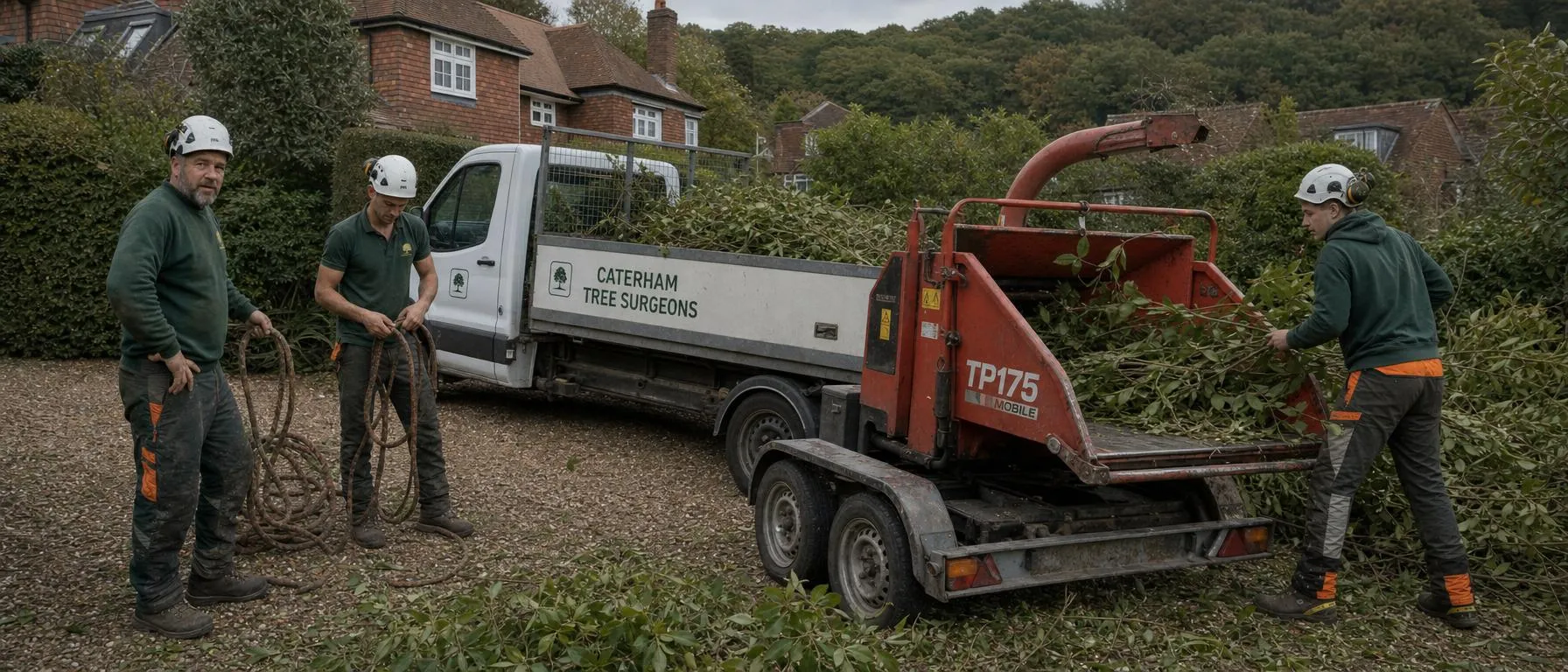
Every hedge trimming visit includes clearing and removing arisings. We don't leave a pile of clippings at the front gate, all hedge waste is chipped or taken off-site to an approved facility.

For a free quote on hedge trimming or hedge cutting in Caterham or the surrounding area, call us on [PHONE] or fill in the form on this page.

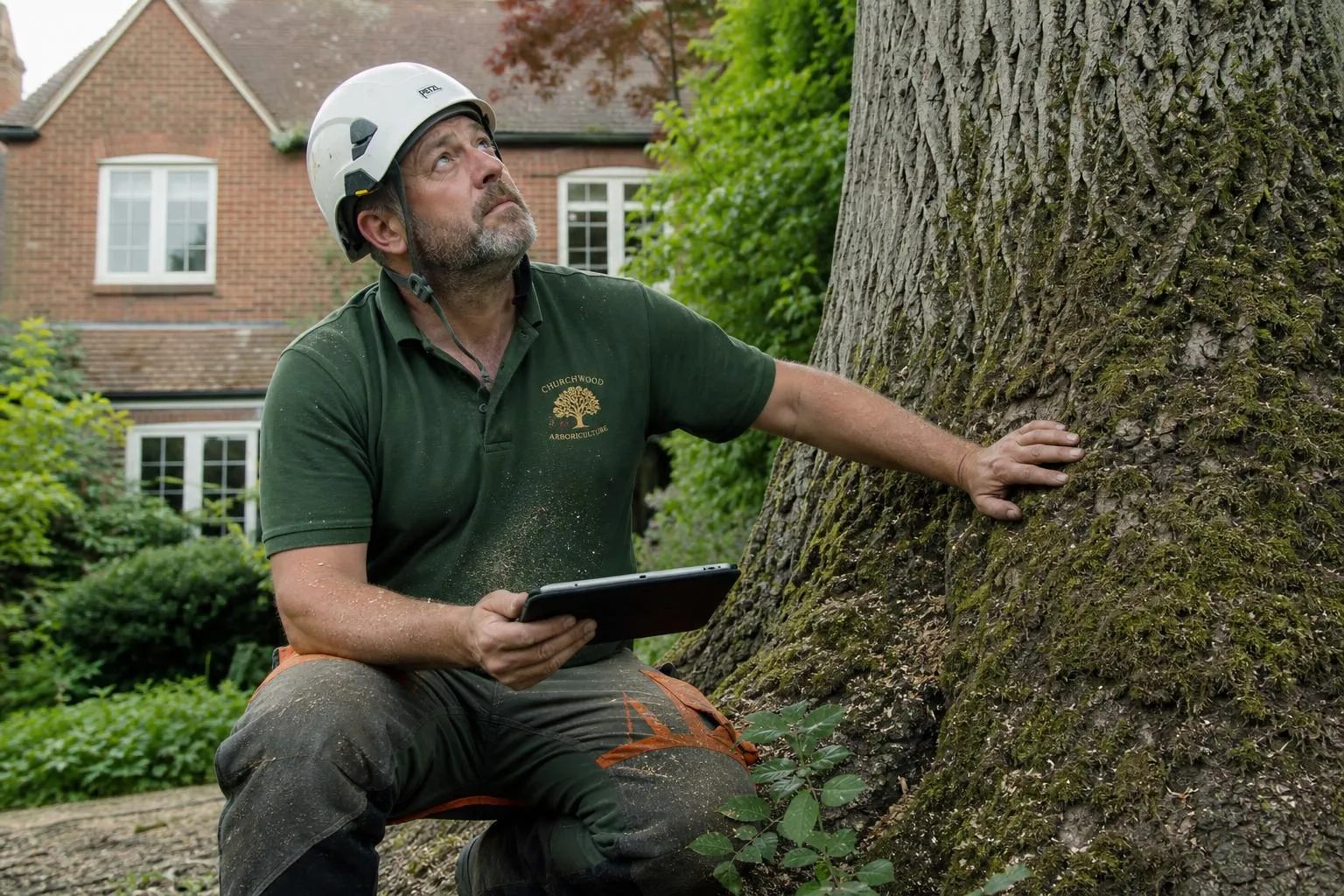
A Caterham tree surgeon assessing a mature oak at the base of the trunk for a quote
NPTC · Fully Insured · BS3998

Why Caterham Homeowners Choose Us for Hedge Trimming & Cutting

Hedge cutting near me is a busy search in this part of Surrey, and there's no shortage of people with a petrol trimmer and a van. The difference with a qualified tree surgeon is in the result and the liability cover behind it. When you book hedge trimming with us, you get a clean, level finish from a team that carries full insurance and knows what it's doing.

  • NPTC certified and fully insured, our team holds NPTC qualifications and full public liability insurance, so you're protected if anything goes wrong near fences, vehicles, or neighbouring property.
  • Correct technique for every species, we cut leylandii and conifers strictly to green wood, leaving no dead voids. For broadleaf hedges such as laurel and privet, we stimulate dense lateral regrowth with properly angled cuts.
  • Height and access handled safely, tall hedges need platform ladders or side-arm trimmer attachments to reach the top safely. We carry the right equipment for hedges of any height.
  • Arisings removed as standard, all clippings cleared and taken away, or chipped on-site where appropriate. No mess left behind.
  • Timing advice included, we'll tell you the best time to cut your specific hedge and flag any nesting bird activity before we start.
  • Local knowledge, we work across Caterham, Warlingham, Kenley, Old Coulsdon, Whyteleafe, and Woldingham every week. We know the local hedgerow species, common boundary disputes, and which conservation area rules apply in Tandridge District.

Call [PHONE] to book or request a free site visit.

Signs Your Hedge Needs Professional Attention

Some hedges only need a tidy-up once a year. Others have been left too long and need a proper reduction before they become a problem with the council or a dispute with the neighbour. Here's what to look for:

  • The hedge has outgrown its space, spreading into the footpath, over the fence line, or blocking light to adjacent windows. Under the High Hedges Act 2003, a neighbour can complain to Tandridge District Council about an evergreen hedge over two metres that blocks their light. Getting ahead of that with a hedge reduction to a legal height saves you a council remedial notice.
  • Leylandii encroachment, leylandii grows 60–90 cm per year if untrimmed. Left for two or three seasons it becomes genuinely difficult to reduce without killing sections of the hedge.
  • Thin patches or bare sections, often a sign of previous cutting back to brown wood on conifers, box blight on box hedges, or dieback caused by drought stress. A professional assessment identifies whether the hedge can be recovered or needs replacing.
  • Overgrown top losing its line, a hedge that has gone to its own devices for a season or more often needs a hedge reduction rather than just a trim to bring it back to a defined height.
  • Regular maintenance overdue, fast-growing species like privet and leylandii need two to three cuts per season. If it's been a year or more, the job will take longer and cost more than if it had been kept on a regular schedule.

Not sure what your hedge needs? Call us on [PHONE] and we'll give you an honest assessment.

How Our Hedge Trimming Service Works

Here's what to expect when you book hedge trimming with Caterham Tree Surgeons:

  1. Free site visit and quote, we visit to assess the hedge length, height, access, species, condition, and disposal requirements. Most sites in Caterham and the surrounding villages can be visited within a few days. No obligation and no call-out charge.
  2. Nesting bird check before any cut, before we start, we inspect the hedge for signs of active nesting. Under the Wildlife and Countryside Act 1981, cutting hedges during the bird nesting season (1 March to 31 August) is restricted where nesting activity is present. If we find active nests, we'll advise you on the earliest safe date to proceed rather than risk a legal issue.
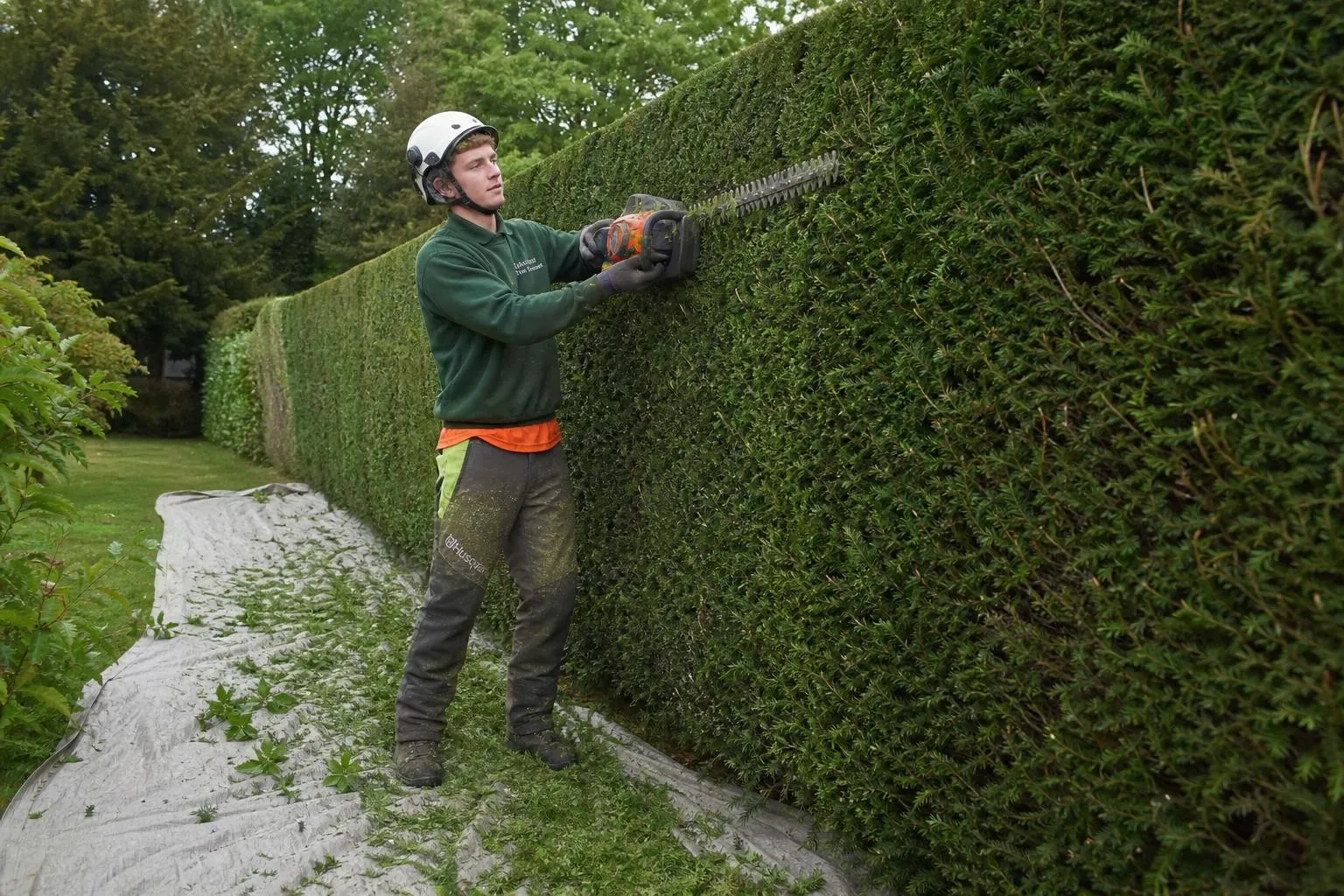
  3. Setting the cut line, for the hedge top we use a string line or sight line to keep the cut level. The hedge face is cut with directional strokes following the face from bottom to top for clean, consistent lines.
  4. The cut itself, we cut the faces first, then the top. For tall hedges we use a side-arm trimmer attachment or platform ladder. Two-person team as standard: one cutting, one clearing cuttings away from the base as we go.
  5. Blow-down pass, once cutting is done, a backpack blower clears residual clippings from the hedge face and surrounding surfaces.
  6. Arisings cleared and removed, all hedge waste is loaded and taken off-site or chipped on-site where access allows. We leave the garden clean.

For most residential hedge trimming jobs in Caterham we can quote, confirm, and carry out the work within one to two weeks. Call [PHONE] to get started.

Hedge Cutting, Reduction, and Renovation in Surrey

Not all hedge work is the same. Here's how we categorise the main types of job:

Routine Hedge Trimming

Regular hedge trimming, keeping the hedge to its established height and width, tidying the hedge face and top, and stimulating dense lateral regrowth. Best carried out once or twice per season depending on species. This is the most common job and the cheapest to maintain when done regularly. Privet, leylandii, laurel, and box all fall into this category for routine hedge trimming.

Hedge Reduction

Reducing the overall height and/or width of an overgrown hedge to a defined target measurement. For broadleaf species such as laurel, privet, and beech, a hard reduction back to the main framework is possible and the hedge will regenerate fully. For conifers, including leylandii, reduction must stay strictly within green growth. We never cut leylandii back to brown wood; once the green is removed, those sections will not regrow. We follow the one-third rule on mature hedges: reducing by more than a third of the total volume in one season puts the plant under excessive stress.

Formative Pruning

Newly planted hedges benefit from formative pruning in years one and two to develop a strong framework and encourage lateral branching. This is done with side cuts only, leaving the top to reach the target height. Without formative pruning, hedges often become thin at the base in later years. It's a step many people skip, and it shows in the hedge five years later.

Hedge Rejuvenation

Severely overgrown broadleaf hedges, hawthorn, privet, laurel that have been left for many years, can often be renovated with hard renovation pruning back to the main stems in late winter. The hedge regrows thicker and denser than before. This is not suitable for conifer hedges, which cannot regenerate from hard wood.

Box Hedge Care

Box hedging requires particular care in Surrey due to the spread of box blight (Cylindrocladium buxicola), a fungal disease that causes brown patches and dieback. Affected material must be removed and tools disinfected between cuts to prevent spreading the spores. We identify signs of box blight at the quoting stage and advise on the best approach before we start.

Whatever the species or scale, we cover all hedge trimming and hedge cutting across Caterham and the surrounding Surrey villages. Call [PHONE] for a free quote.
Credentials

Qualified, Insured and Accountable

When you let someone work at height with a chainsaw over your home, credentials matter.

NPTC Qualified

CS30, CS31 and CS38 certificates across chainsaw use, felling, and aerial rope-and-harness work — the exact tickets to check for.

Fully Insured

Comprehensive public liability cover, up to £5 million, on every job. Ask to see our certificate; we are happy to show it.

BS3998 Compliant

All pruning and felling follows the British Standard for tree work, on every single job.

Locally Based

Working in Caterham and the wider Tandridge district week in, week out.

We are always happy to show our certificates and talk you through exactly how we will approach your job before you commit to anything.

Storm damage or a fallen tree?

Our 24/7 emergency tree removal team responds fast to make the site safe, day or night, across Caterham and Surrey.

Call [PHONE] Now
Good to Know

Frequently Asked Questions

Straight answers on cost, permissions and safety. If something about your tree worries you, book a free assessment.

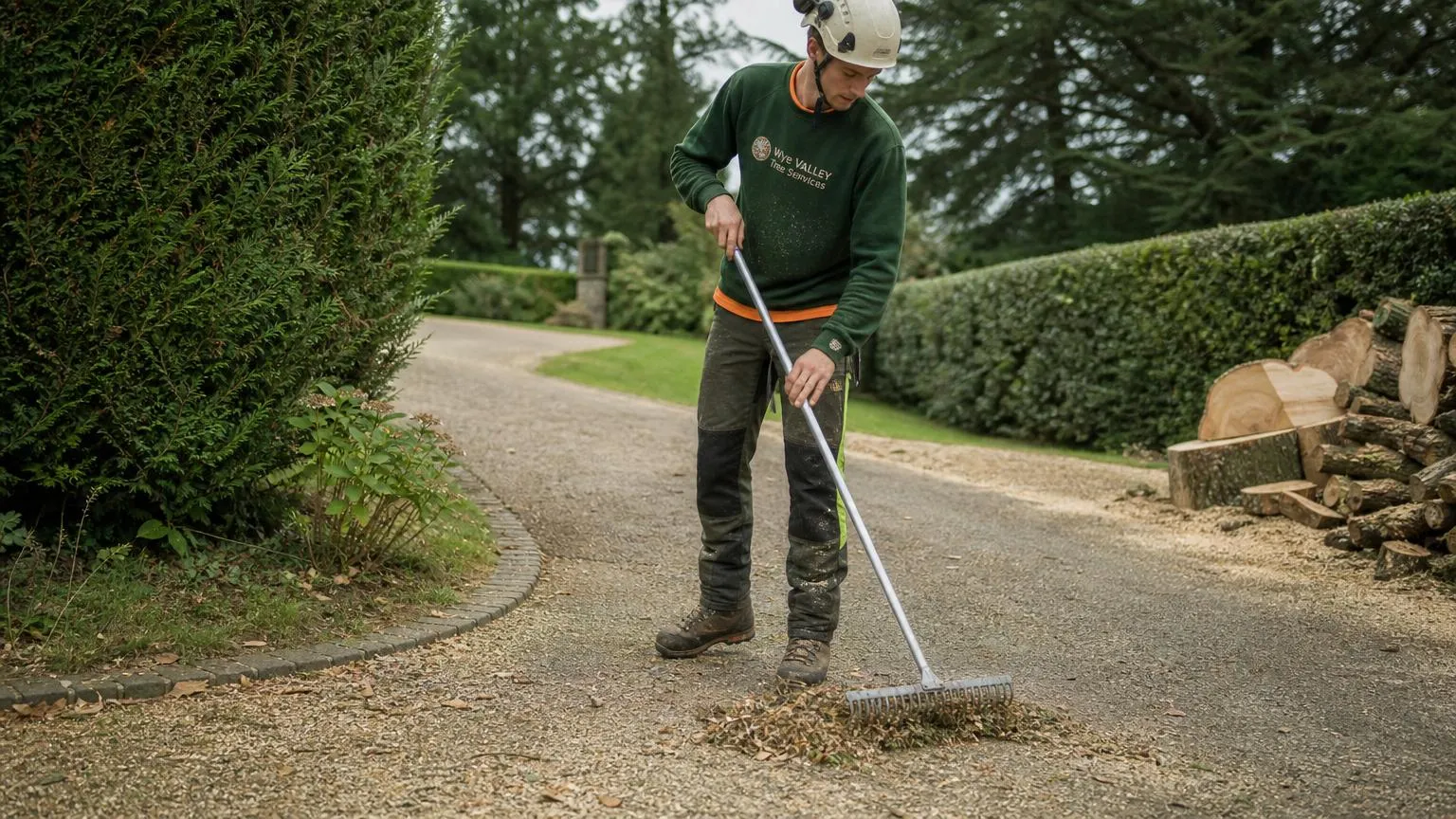
A tree surgeon raking and clearing a driveway at the end of a job in Caterham
How much would it cost to trim a hedge?

Hedge trimming costs in Caterham and Surrey depend on the length of the hedge, its height, the species, access, and whether you need arisings removed. Most residential hedge trimming jobs are priced per job rather than per metre, though per-metre rates give a useful benchmark: expect roughly £3–£7 per linear metre for a standard single-face trim on a hedge up to two metres tall. A typical front garden privet or leylandii hedge, say, 15–20 metres long and 1.5–2 metres high, generally comes in between £80 and £180 for a tidy-up. Taller hedges, difficult access, or jobs requiring a cherry picker will cost more. Arisings removal is included in our quotes. We provide a written estimate after the site visit, so there are no surprises. Call [PHONE] to book a free hedge trimming quote.

How much should I pay for hedge trimming?

A reasonable price for professional hedge trimming near you in Surrey reflects the equipment, labour, time, and disposal involved, not just the cutting itself. Very cheap quotes often mean arisings are left on-site, or the person cutting isn't insured to work at height. When comparing hedge trimming quotes, check that the price includes debris clearance and that the contractor is insured for work near boundaries, parked vehicles, and neighbouring property. NPTC-qualified and fully insured hedge contractors typically charge a little more than a general gardener, but the result, and the protection if something goes wrong, is worth it. For most standard residential hedges in Caterham, you should expect to pay between £80 and £250 depending on size and condition.

When should you not trim hedges in the UK?

Under the Wildlife and Countryside Act 1981, it is an offence to intentionally damage or destroy the nest of any wild bird while it is being built or used. In practice, this means hedge cutting is restricted during the bird nesting season, broadly 1 March to 31 August, wherever active nesting is present. The law doesn't ban all hedge cutting in summer, but it does require you to check for active nests before cutting. If a nest is present, you must wait until the chicks have fledged before proceeding. As a rule of thumb, the safest windows for hedge cutting in the UK are late winter (February, before nesting begins) and late summer to autumn (September onwards, once most species have finished breeding). We check for nesting activity before every job.

What time of year should you prune a hedge?

Timing depends on the species. Broadleaf hedges, beech, hornbeam, privet, laurel, hawthorn, are best cut in late winter (February) before new growth begins, and again after the main growth flush in June or July. Conifer hedges, including leylandii, are best trimmed in late summer, typically August to September, after the main growth period and outside the peak nesting season. Yew and box are best trimmed once in late summer. Privet grows so fast it generally benefits from a third cut in late spring. The nesting bird window (1 March–31 August) is a constraint on all of these, so late February and September are the two most practical months for most Surrey hedges.

How often should hedges be trimmed?

It varies by species. Leylandii and privet are the fastest-growing and typically need two to three hedge trimming visits per season to stay manageable, once in late spring, once in midsummer, and sometimes a third tidy-up in early autumn. Laurel grows vigorously too and usually needs hedge cutting twice a year. Slower-growing species, yew, beech, hornbeam, generally do well with a single annual hedge trimming. Box is usually cut once, in late summer. Regular hedge trimming is considerably cheaper than a reduction on a hedge that's been left to grow for two or three seasons. A hedge that's been maintained costs a fraction of one that's been neglected and now needs several hours of hard reduction work.

What is the 2 metre hedge rule?

The High Hedges Act 2003 allows a homeowner to complain to their local council, in Caterham's case, Tandridge District Council, if a neighbouring evergreen hedge is over two metres tall and is blocking light to their property. If the council upholds the complaint, they can issue a remedial notice requiring the hedge owner to reduce it to a specified height. This applies only to evergreen hedges (including leylandii), not deciduous hedges or individual trees. If your hedge is over two metres and you're in a dispute with a neighbour, reducing it to a legal height now avoids a council enforcement process. We carry out hedge reductions specifically for this situation and can advise on the appropriate target height for your hedge and site.

What months are best to cut hedges?

The two optimal windows for most hedge trimming in the UK are February and August/September. February sits just before the bird nesting season starts and just before new growth begins, ideal for a hard cut that the hedge will regrow cleanly from in spring. August and September fall after the main growth flush, after most birds have finished breeding, and while there's still enough warmth for cut surfaces to harden off before winter. If you can only book one hedge trimming visit per year, late summer is the safest time for most species. For privet and leylandii that need more frequent cutting, add a cut in May or June between those two windows.

Free Quote

Book Your Free Site Visit

NPTC-certified, fully insured, BS3998 on every job. Tell us about your tree and we’ll come back with a clear, written price.

  • Free written quote before any work starts
  • TPO & conservation-area checks handled for you
  • Tidy finish — all arisings chipped, logged or removed

Get a Free Quote

Tell us about the job — free, no-obligation quote.

No spam. No obligation.

Need Hedge Trimming in Caterham?

Whether it's a quick tidy-up, a major hedge reduction, or an overgrown leylandii that's been putting off the neighbours, we can sort it cleanly and quickly. Our hedge trimming service covers hedge cutting caterham and all surrounding villages. NPTC certified, fully insured, all arisings removed. Serving Caterham, Warlingham, Whyteleafe, Kenley, Old Coulsdon, and the surrounding Surrey area.

Tap to Call: [PHONE]